

THE LEADING NETWORK OF LABORATORIES FOR PFAS ANALYSIS
What are PFAS?
PFAS (per- and polyfluoroalkyl substances) are extremely persistent synthetic chemical compounds — known as ‘forever chemicals’ — that have been used for decades in products such as fire-fighting foams, food packaging, waterproof textiles and non-stick coatings.
They are frequently found in drinking water, groundwater and soil, and are a cause for concern because they do not degrade, they bioaccumulate and are associated with health risks, making their analysis essential.
European regulatory framework: obligation to analyse PFAS
2020 — Drinking Water Directive (EU 2020/2184)
The EU adopts new limits for PFAS in drinking water.
January 2023 — The requirement comes into force
Member States are required to test for PFAS in drinking water.
European legislation sets out two reference limits for monitoring PFAS in drinking water:
The combined concentration of 20 specific PFAS must not exceed 0.1 µg/L
If the total range of PFAS present is considered (not limited to those 20), the maximum permitted value is 0.5 µg/L.
REACH (proposed restriction) — The EU is moving towards a comprehensive restriction on the use and production of PFAS, which reinforces the need for continuous monitoring.
2024 — Directive (EU) 2024/3019 of the European Parliament and of the Council of 27 November 2024 on the treatment of urban waste water includes, for the first time, specific obligations regarding PFAS within the framework of tertiary treatment to remove micro-contaminants.
2026 — Water Framework Directive (WFD) and new environmental standards for PFAS
Directive (EU) 2026/805, amending the WFD (2000/60/EC), the Groundwater Directive (2006/118/EC) and the Environmental Quality Standards Directive (2008/105/EC), introduces, for the first time, specific limit values for PFAS in water bodies and biota. The new values are:
- Groundwater: Total PFAS: < 0.1 µg/L (in line with drinking water criteria for individual PFAS and the restricted total).
- Surface water: Total PFAS: < 0.0044 µg/L PFOA equivalents (stricter limit due to greater ecological sensitivity).
- Biota and sediments: Total PFAS: < 0.077 µg/kg PFOA equivalents (to protect the food chain and prevent bioaccumulation).
Analysis of PFAS in Water
Drinking water and bottled water.
Inland waters.
Wastewater.
Seawater.
Which PFAS compounds are covered by our accreditation?
Perfluoroalkyl carboxylic acids (PFCAs)
| TARGET PFAS ANALYTES |
| Perfluorooctanoic acid (PFOA) |
| Perfluorononanoic acid (PFNA) |
| Perfluorodecanoic acid (PFDA) |
| Perfluorododecanoic acid (PFDoDA) (PFDoA) |
| Perfluorotridecanoic Acid (PFTrDA) |
| Perfluorohexanoic acid (PFHxA) |
| Perfluorobutanoic acid (PFBA) |
| Perfluoropentanoic acid (PFPeA) |
| Perfluoroheptanoic acid (PFHpA) |
| Perfluoroundecanoic acid (PFUnDA) (PFUdA) |
Perfluoroalkyl sulphonic acids (PFSA)
| TARGET PFAS ANALYTES |
| Perfluorobutane sulfonic acid (PFBS) |
| Perfluoropentane sulfonic acid (PFPeS). |
| Perfluorohexane sulfonic acid (PFHxS). |
| Perfluoroheptane sulfonic acid (PFHpS). |
| Perfluorooctanesulfonic acid (PFOS). |
| Perfluorononane Sulfonic Acid (PFNS). |
| Perfluorodecane Sulfonic Acid (PFDS). |
| Perfluoroundecane Sulfonic Acid (PFUnDS). |
| Perfluorododecane Sulfonic Acid (PFDoDS). |
| Perfluorotridecane Sulfonic Acid (PFTrDS). |
Internal methods based on UNE-EN 17892 and ISO 21675
Tests to determine the presence of perfluoroalkyl and polyfluoroalkyl substances (PFAS) in water are carried out using in-house methods based on the UNE‑EN 17892 and ISO 21675 standards.
To this end, liquid chromatography coupled with tandem mass spectrometry is employed, using either LC–MS/MS or high-performance liquid chromatography with mass-mass spectrometry (HPLC/MS–MS). Furthermore, these methods enable the determination of compounds of interest related to PFAS, such as trifluoroacetic acid (TFA), a persistent contaminant of growing environmental significance due to its high mobility in the aquatic environment.
This analytical approach enables the identification and quantification of these compounds at very low concentrations, ensuring reliable, accurate and comparable results for water quality monitoring, as well as for regulatory compliance and the assessment of emerging contaminants.
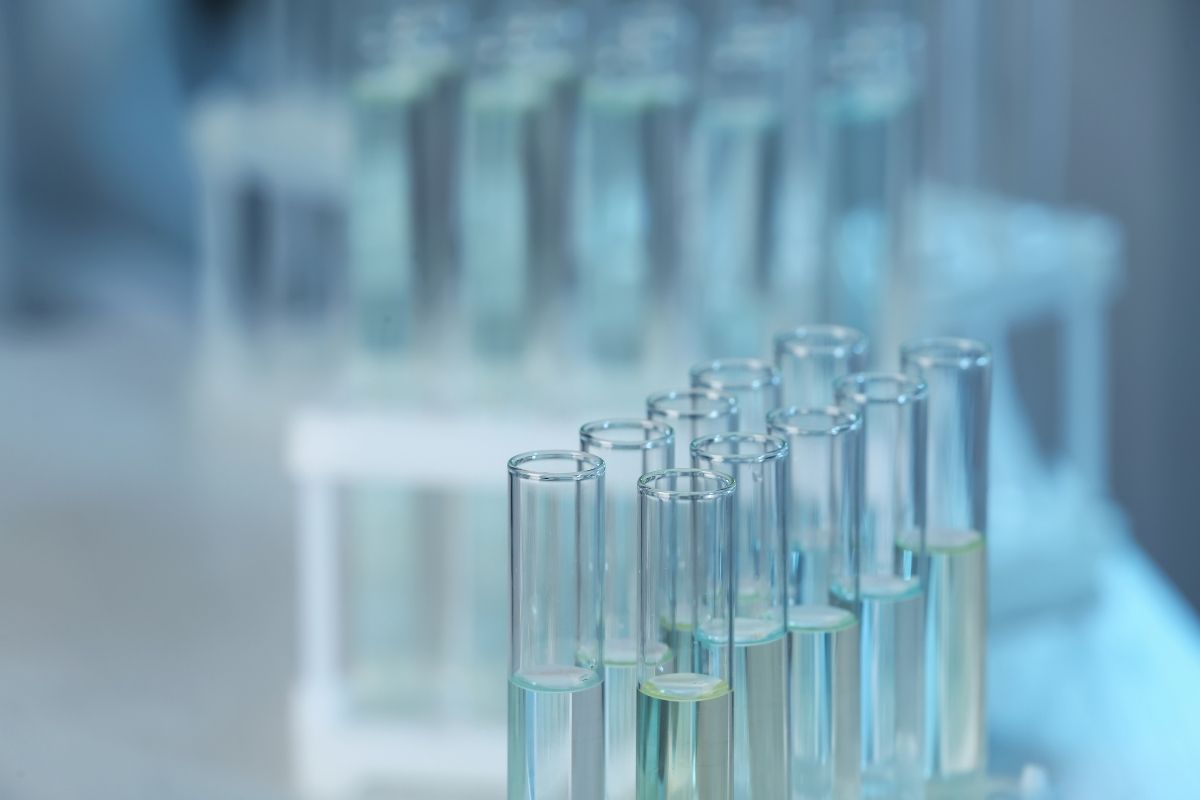
Step-by-step analysis of PFAS

Why choose us for PFAS analysis?
Maximum range
We have a network of laboratories specialising in PFAS analysis, located throughout the country, making us a leading provider of environmental analysis services. Furthermore, we offer the widest range of accredited parameters and environmental matrices, enabling us to serve all types of sectors and fields.
Guaranteed deadlines
Direct contact with our customers is our ‘hallmark’. We work hard every day to offer them the highest quality of service, which is why one of our main objectives is to ensure strict adherence to delivery deadlines. Furthermore, we provide a personalised response to urgent matters, unforeseen circumstances or specific requirements, so that our customers always receive the most efficient response possible.
The highest standard of service
Our accreditations attest to our commitment to providing a top-quality PFAS analysis service. We operate to stringent quality standards to ensure that our environmental laboratories can deliver their services with the utmost rigour and reliability.
Our Accreditations
We hold a large number of accreditations from both ENAC and other bodies, which enable us to guarantee our clients the highest levels of reliability and quality in our results.
Would you like to find out more about PFAS analysis by Eurofins Environment Testing Spain?
Contact us