microplastics reclaimed water risk

MICRONANOCARE


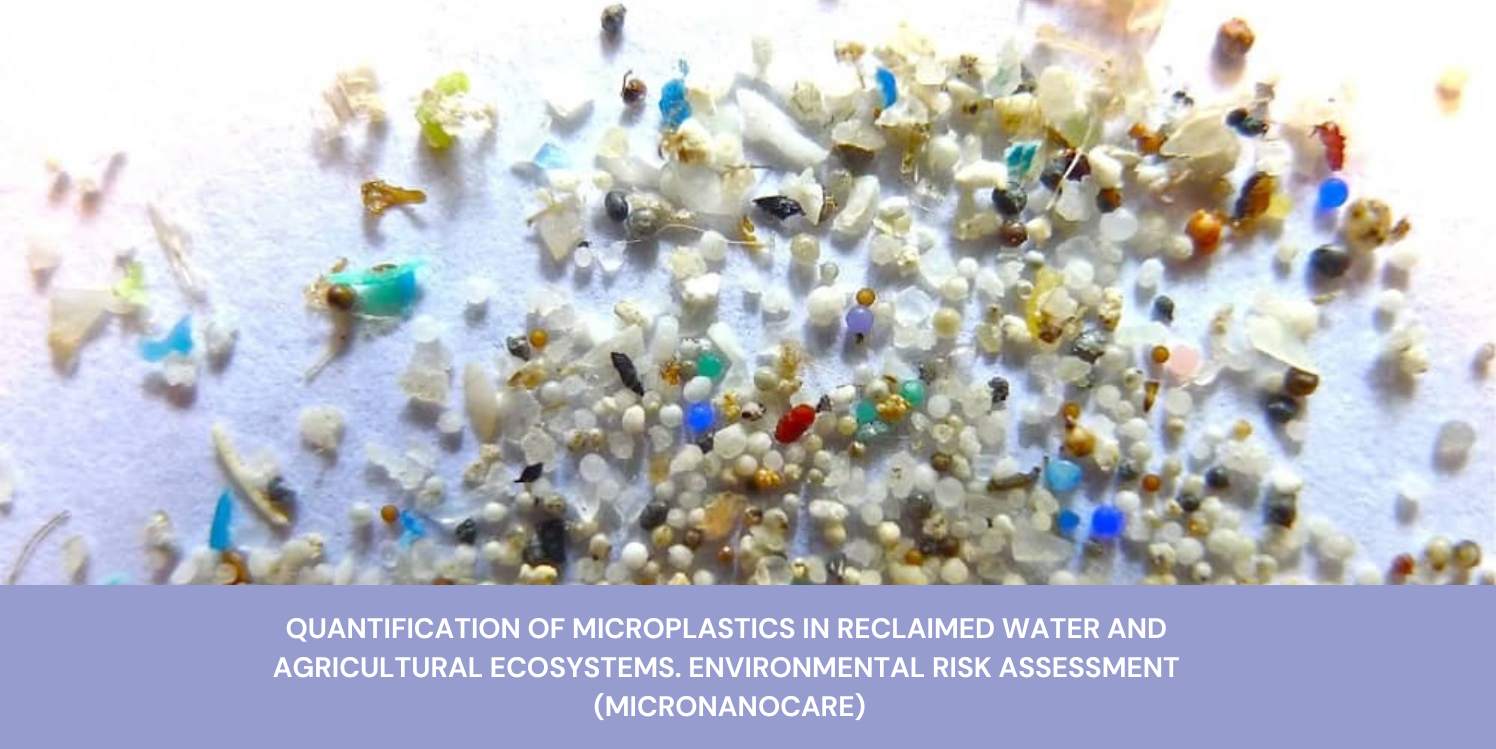
Quantification of microplastics in reclaimed water and agricultural ecosystems. Environmental risk assessment

Description

Objective 1: Development of sensitive, selective, and ideally single-step analytical method capable of identifying and quantifying these micronanoplastics in different matrices (wastewater and reclaimed water, sludge and soils, living organisms).

Objective 2: Development of an efficient sampling method that enables the reliable and cost-effective collection of micronanoplastics

Objective 3: Evaluate and optimize the treatment capacity of the technologies currently implemented in wastewater treatment plants (EDAR) in terms of micronanoplastics

Objective 4: Determine the fate and environmental load of micronanoplastics in agricultural ecosystems where sludge is applied and reclaimed water is used.

Objective 5: Evaluate the exposure and potential risk associated with these particles for aquatic and terrestrial organisms, as well as for human health.

Services provided by Eurofins | IPROMA

Study of current micronanoplastics quantification techniques and their limitations.

Development of an analytical method that enables the rapid, efficient and objective quantification of micronanoplastics (MNPs) using TDS-GC/MS, suitable for routine analyses carried out in wastewater treatment plants (EDAR)

Sample preparation setup according to EDAR matrices - Wastewater, Reclaimed Water, Sewage Sludge, Agricultural Soils, Biota (Earthworms)

Determination of the fate of these contaminants in the water-soil agricultural system and assessment of the toxicity associated with exposure to MNPs in both terrestrial and aquatic organisms.


2020-2023


TOTAL 846.235 €

MICRONANOCARE

Our partners

Eurofins IPROMA Logo
FACSA logo
Madrid Institute for Advanced Water Studies
funding for the Nanocare project

Societal Challenges. Spanish State Plan for Scientific, Technical and Innovation Research 2017-2020.