Research and development of protocols using metabarcoding techniques to define and adapt biological water-quality indices based on diatoms and benthic crustaceans
Description
The Wate Framework Directive 2000/60/EC —also known as the a Water Framework Directive (WFD)— aims to protect aquatic environments and ensure that all water bodies across Europe achieve a good ecological status. Royal Decree 817/2015 establishes the criteria for determining when this “good ecological status” is reached. It is achieved when biological conditions show minimal deviation from reference conditions that represent the best possible ecological state. To assess the ecological status of water bodies, biomonitoring studies are essential, and their core component is the use of biological indicators.
Among the proposed bioindicators, phytobenthic algae and benthic invertebrates play a particularly important role due to their physiological and ecological traits, which make them ideal organisms for use as ecological indicators. Within aqatic ecosystem biomonitoring programs, assessing the taxoomic composition and abundance of bioindicator communities is essential for understanding ecosystem function and stability, as well as for safeguarding the ecological services these organism provide (Stegen & Hurlbert 2011; Kermarrec et al. 2013).
However, biomonitoring has also faced criticism because, relying mainly on morphological criteria for community identification, it is time-consuming and requires extensive taxonomic expertise. For this reason, over the past decade new DNA-based methodologies —such as metabarcoding— have emerged, allowing the simultaneous identification of multiple taxa form organismal or environment samples. One particularly recent application of metabarcoding is the characterization of eDNA (environmental DNA), which is DNA commonly extracted from environmental samples such as water or soil.
What is eDNA?
eDNA is essentially a mixture of DNA originating form organisms that currently inhabit —or have recently inhabited— a particular environment. This genetic material may float freely in the environment or become adsorbed onto particles such as sediment. Several studies have already demonstrated the potential of metabarcoding for assessing the ecological status of water bodies using bioindicator communities (Kermarrec et al., 2014; Visco et al., 2015; Zimmermann et al., 2015; Pawlowski et al., 2016).
However, a challenge associated with metabarcoding is the lack of complete and validated reference-sequence databases for certain taxa. Such as databases are essential for assigning environmental sequences from unknown specimens to known species. Therefore, it is crucial to ensure that DNA barcodes of the species in water samples are includd in reference libraries, as this enables accurate taxonomic identification at the species level.
Situation on the Iberian Peninsula Regarding Diatoms and Benthic Crustaceans
In the Iberian Peninsula, environmental condition for continental aquatic flora and fauna are generrally harsher, particularly on the Mediterranean side (Gasith & Resh, 1999). Historical factors also play a significant role (Bonada et al., 2004). As a result, the region exhibits greater faunal diversity and a high rate of endemism. Additionally, the variety of pressures affecting water bodies has increased in recent years. These pressures can significantly expand or narrow the tolerance ranges of species.
In the southern part of the Iberian Peninsula, many water bodies are subjected to intense evaporation processes. During the dry season, these systems naturally experience a significant reduction in flow, to the point where water may completely disappear for several months. As an example of this type of environment can be found in the Guadiana River basin. This basin combines different types of lithology that influence water chemistry, resulting in more acidic or more basic characteristics depending on the area. These contrasting conditions contribute to a high diversity of organisms.
Diatoms
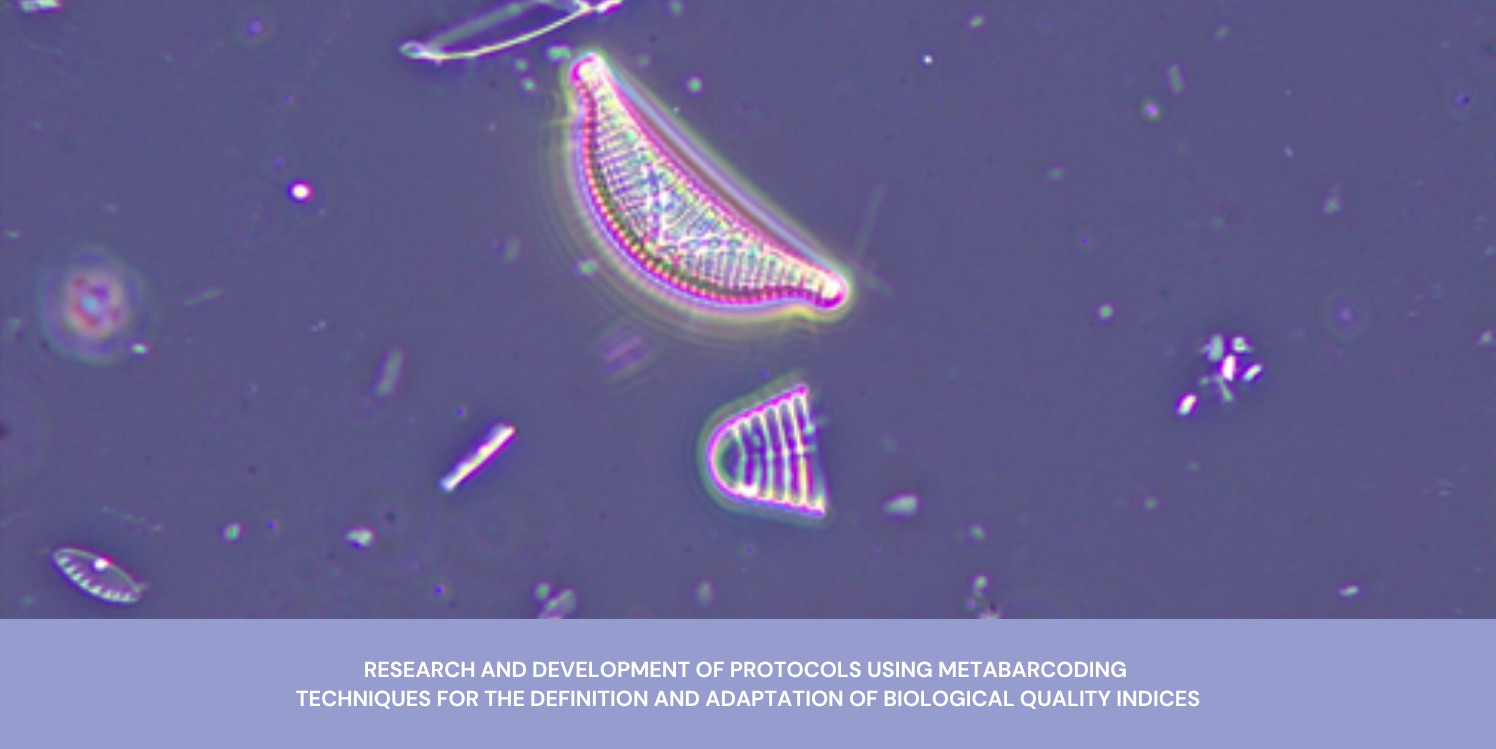
Organisms inhabiting such highly variable systems must develop special adaptations to survive these extreme environmental conditions. Diatoms are a type of microorganism that play an essential role within the Water Framework Diretive for assessing water quality at the European level. Their communities are strongly influenced by fluctuations in water flow and by the physical-chemical characteristics of these river networks.
When working in such highly variable systems, the assessment of ecological status often becomes inaccurate. This is because certain species act as early colonizers after periods of intense drought. Their presence can lead to an overestimated ecological value, as these species are typically associated with nutrient-poor environments. However, species such as Achnanthidum minutissimum can develop dominantly over the resto of the diatom community —not necessarily due to nutrient levels, but because they are highly efficient at exploiting the absence of competition and the newly available space for colonization. As a result, the final ecological assessment may be misleading.
Adapting Diatom Indices
Other rare or infrequente species may also appear in these river networks due to the particular characteristics of such systems, whose ecology is still not fully understood. For this reason, determining the cological status of these ecosystems with greater accuracy is essential for properly applying the European Water Framework Directive. Thus, the points mentioned above highlight the nees to adapt diatom indices to the typical rivers of the Mediterranean region.
Diatom indices requiere highly precise taxonomic identification of the communities. The goal is to avoid misidentifications that could compromise the accuracy of a diatom-based water-quality index (Besse-Lototskaya et al., 2006). For this reason, finding alternatives that adress the needs and limitations of the traditional approach has become increasingly important. DNA metabarcoding represents a powerful solution for rapidly assessingdiatom diversity in water bodies. This technique makes it possible to quickly obtain a comprehensive “species list” from a single sample, significantly improving the efficiency and reliability of ecological evaluations.
Benthic crustaceans
Another highly relevant group of ecological indicators —alongside diatoms— is represented by benthic crustaceans, including branchiopods, copepods and ostracods. These organisms are used to calculate the ABCO index for classifying the ecological status of lakes, as established by the Water Framework Directive. The communities formed by these benthic invertebrates exhibit distinct ecological and physiological traits. They occur cross al types of lake water bodies, have life cycles fully contained within aquatic environments, and a respond sensitively to habitat disturbances. These characteristics make them excellent candidates for evaluating lake water quality.
However, due t their morphological complexity, identifying these organism at the species level is difficult and problematic, requiring the expertise of highly specialized taxonomists. For this reason, developing molecular protocols for identifying benthic crustacean communities in lakes —based on the application of eDNA— would represent a significant advantage over the tradtional approach. This would greatly improve both the speed and efficienty of obtaining the corresponding water-quality index.
For all these reasons, the present project aims to combine both the traditional morphological approach and the molecular approach. The objective is to develop and validate protocols based on metabarcoding techniques for the biomonitoring of Mediterranean rivers and lake, enabling the calculation of both diatom indices and the ABCO index. Additionally the prject proposes the design os a new benthic-diatom index specifically to the environmental characteristics of Mediterranean ecosystems.
Technological Challenge and Innovation in Diatoms and Benthic Crustaceans
The most innovative aspect of this project lies in the development of metabarcoding protocols for use biomonitoring programs. These programs assess water quality based on diatoms and benthic crustaceans. Integrating —or even routinely applying— these molecular techniques into ecological-status assessment studies in Spain offers significant benefits: notable reductions in cost and processing time, and greater enalytical efficiency. Moreover, the positions Eurofins Cavendish, S.L. as a sector leader, becoming the first company to carry out this type of advanced analysis.
Another major advancement proposed in this project is the creation of a new benthic-diatom index adapted to river basins influenced by Mediterranean conditions. This index would be much better aligned with the specific environmental pressures characteristic of this region. It would also significantly reduce the time required for species identification, thereby optimizing resources and improving the efficiency of ecological assessments.
January 2022-June 2024
TOTAL 347.320 €
EUROFINS-CAVENDISH 217.075€
Research and development of protocols using metabarcoding techniques to define an adapt biological water-quality indices based on diatoms and benthic crustaceans
Our Partners